
Weekly Log No.2: What I've Been Reading, Watching, and Listening To
From May 18th - June 21st, I dug into a new Gotham City Sirens comic, read an amazing short story collection, pondered Mother Mary (2026), loved Zoolander (2001), and entered season 4 of DS9.

Today has been an emotional day. But despite the frustrations, to put it mildly, I am galvanized by a confidence so bright no one has the power to dim my shine. Life has been volatile lately. But I am so blessed to have such love and support undergirding every step I take. I also have the sincere pleasure of turning to my craft as a writer to make sense of the world through art and my own history. For that I am incredibly grateful.
Over the last several weeks I’ve been able to dig into works that have provoked strong reactions and curiosity — even if I didn’t think they worked overall. If you want to hear me talk in-depth about Obsession, I was on New York Times’ podcast Cannonball with Wesley Morris discussing Curry Barker’s hyper-successful film, the state of romance for younger generations, and the Bluebeard fairytale’s appearance in 1940s-1950s Hollywood women’s pictures. I also appeared on KCRW’s Press Play again to review Disclosure Day, The Furious, The Little Sister, and Find Your Friends. I reviewed Office Romance (which allowed me to tease out thoughts on the emotional shallowness of the rom-com genre and the film’s failures to evoke the sweet throwback storytelling its aiming for) and I Love Boosters (which lacked the characterization and directing prowess necessary to meet its aims) for Vulture timed to their release dates a while ago. You can find Cannonball and my other audio appearances wherever you listen to podcasts.
As always this isn’t a comprehensive list but a snapshot of what I’ve been most interested in during the timeline of the weekly log. (This one is admittedly covering over a month!)
Disclosure Day
(2026, Dir. and Co-Writer Steven Spielberg, Writer: David Koepp)
I’ve seen Disclosure Day twice. At the beginning of June for a press screening and again on the 21st with a close friend. I loved the film even more the second time, leading me to write a piece I am incredibly proud of. In Open Your Fucking Heart: Why I Loved Disclosure Day, A Rant and Review in 17 Notes, I posit, “Your cynicism isn’t wisdom. I’d argue cynicism is the exact opposite of wisdom. It is closed off, unbending, cruel.” I delve into the worth of empathy, online leftist’s cynicism, the emotional beauty and thrilling nature of the film, as well as which performances especially sparked for me. This is a personal piece of criticism in which I wear my heart rather openly. I hope it inspires you.
Police Story (1985)
(Dir. Jackie Chan)
Who gives a fuck about a script when the action is this bonkers, this potent, this expertly crafted? The final sequence in the mall has some of the most insane stunts I’ve ever seen in a film. I was hooting and hollering watching this. Thank the cinematic gods for Jackie Chan.
Hokum (2026)
(Director & writer Damian McCarthy)
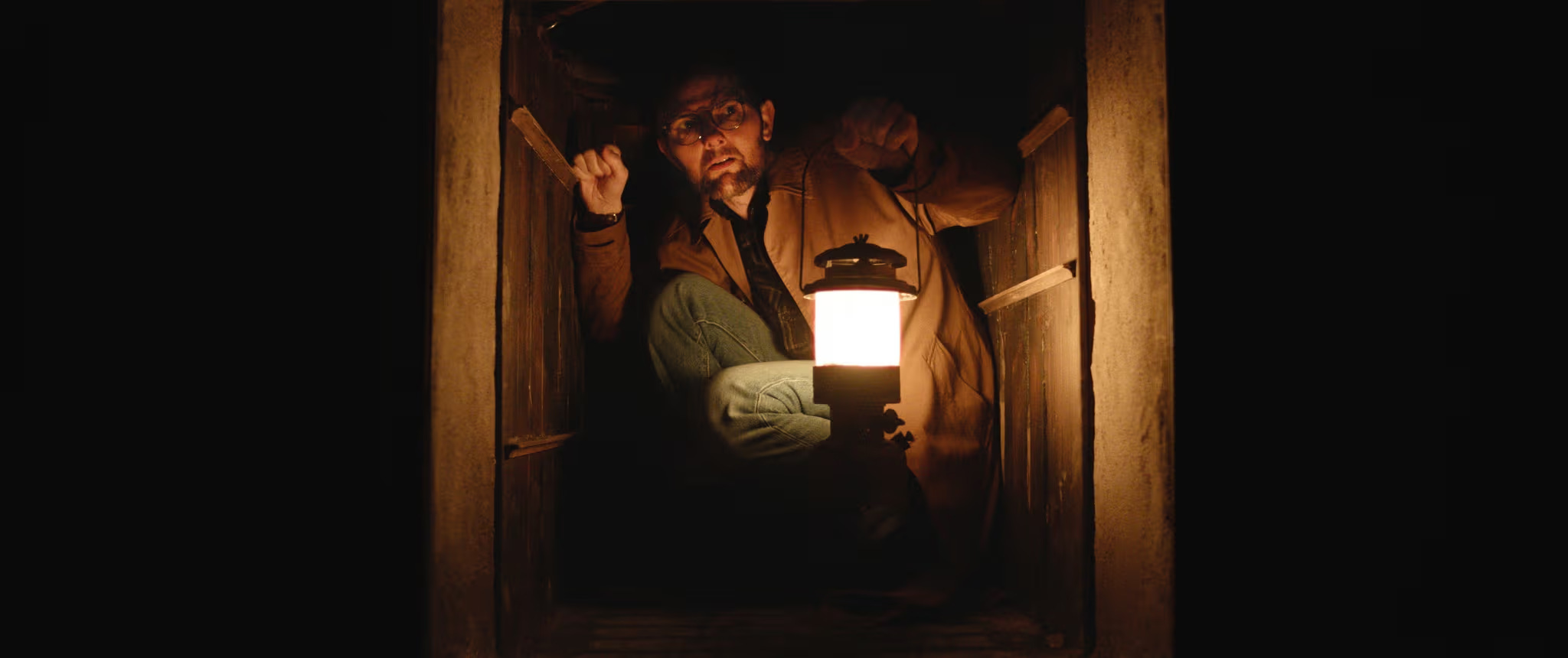
Hokum is a remarkably symmetrical film. It begins and ends depicting a fictional story that Ohm Bauman (Adam Scott) is writing. It’s a story that caps off his hyper-successful trilogy as an author. But he must put the story he’s puzzling over aside in order to travel to rural Ireland – where his parents had their honeymoon to lay their ashes to rest. Witnessing the way he let go of their ashes makes it immediately evident he loved his mother and can’t stand his father. But why? The horror of the film isn’t born from that answer. That answer is of course rooted in a traumatic incident that reconstituted my understanding of why Ohm was such a raging asshole to every local he came across at the haunted inn he holes up in.
The horror that follows includes a creepy witch, folklore, and a man’s routine, clearly not supernatural violence – with clear rules and emotional stakes. I enjoyed this more than the director’s previous film Oddity. Like Hokum, Oddity is effectively creepy, pulsing with folklore and horror that delights. But the ending of that film felt cruel toward the main character and left a sour taste in my mouth. Hokum was enlivening, fun, and the right amount of weird thanks to bypassing any rote understanding of trauma that has been plaguing the horror genre for over a decade. I also really enjoyed how Scott played such an asshole character without losing sight of the tenderness necessary for his story to resonate.
Kill Bill: The Whole Bloody Affair (2004)
(Director & writer Quentin Tarantino)
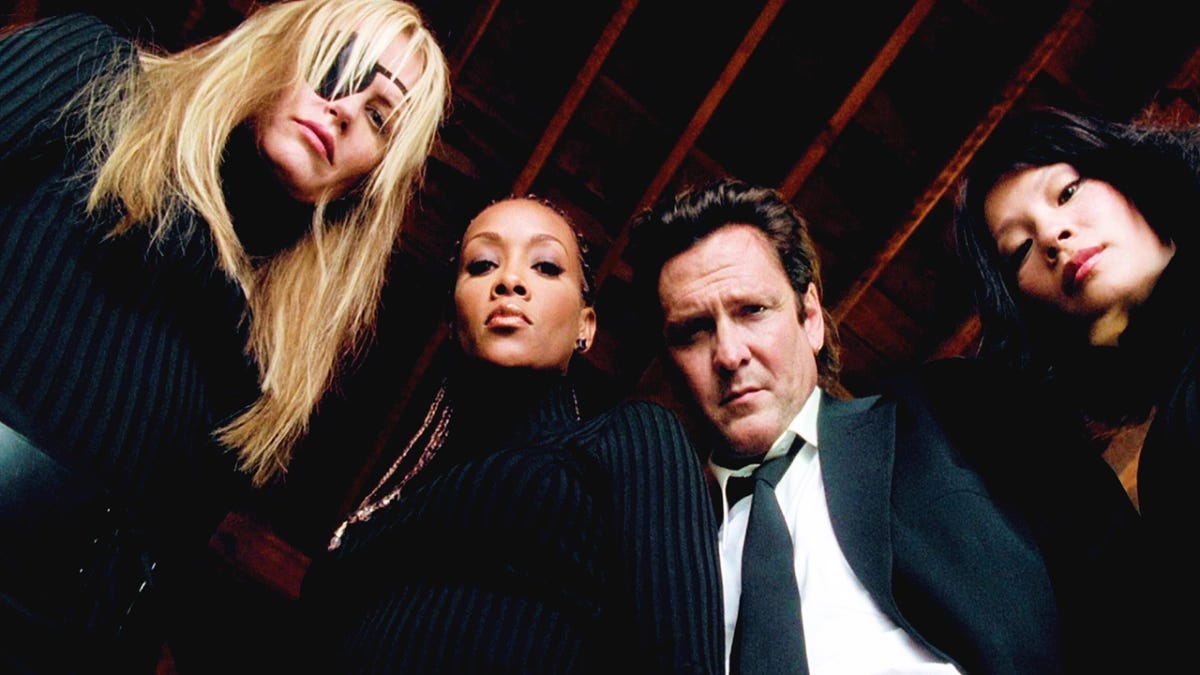
My favorite Tarantino movie is the one in which his indulgences are under control in adapting the work of Elmore Leonard, the 1997 Pam Grier vehicle Jackie Brown. On the other hand, Kill Bill: The Whole Bloody Affair is one of Tarantino’s most indulgent films. In combining the two Kill Bill films with some restructuring and lengthening sequences like the anime backstory for O-Ren Ishii (Lucy Liu), Tarantino crafts an even more ecstatically galvanizing film. I’ll keep it buck though for all its color, influences, and flair, the last movements of the film lose me a bit. I think I find Beatrix’s (Uma Thurman, on absolute fire) journey more intriguing when it is rooted in her vengeance rather than the unsatisfying exploration of her motherhood and relationship with Bill (David Carradine).
Admittedly, I bristle when I witness films in which women are only allowed gnarly vengeance and survival intact because they’re doing so from the perch of motherhood. Thurman’s performance is tremendous. All the performances in this film are, especially the women. So much so it represents a stunning failure of imagination in Hollywood that Liu, Vivica A. Fox, and the rest of the women in the cast didn’t see their careers reach remarkable new heights after this. I mean that especially when it comes to Fox. Whew. My favorite sequences in the film are hers and Liu’s. Like goddamn! Talk about screen presence and physicality.
Mother Mary (2026)
(Director & writer David Lowery)
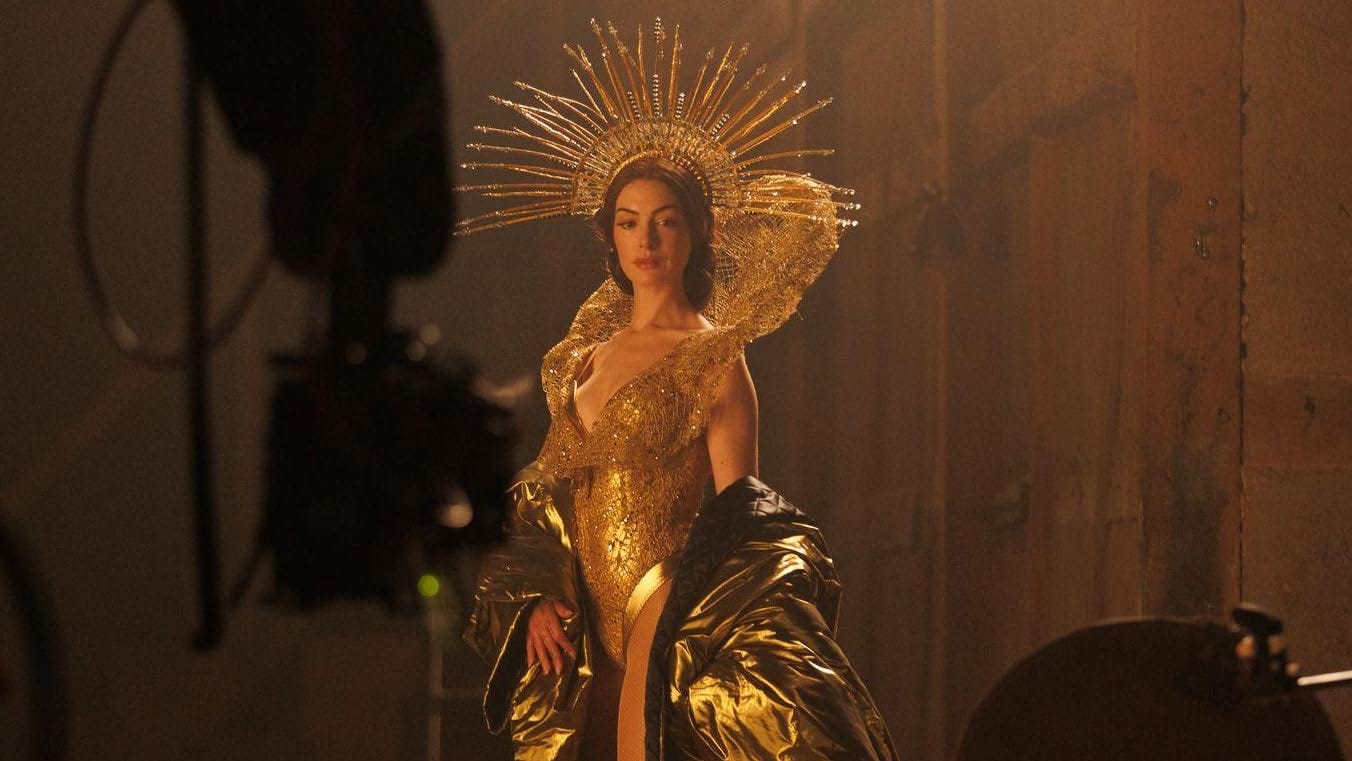
While I had an enjoyable time watching Mother Mary in the moment, I don’t think it is a good film. An effortful one, perhaps. I appreciated the beginnings of things: the barbed tension emanating from Michaela Coel’s fashion designer, Sam, when faced with the pop star/former friend, Anne Hathaway’s Mother Mary, who needs her help in designing a dress that helps her contend with her present moment as an artist. That Mother Mary disregards boundaries and treats her needs as tantamount sets up intriguing character psychology and ideas that aren’t well built upon. Instead they’re traded for a narrative shift that doesn’t work. At all.
I liked the choreographed lushness and stagey quality in the film that unfortunately devolves into the sterile. — like Mother Mary going up and down staircases at the beginning and end of her concerts, being shuffled along by the larger apparatus of assistants that keeps her global pop force. But the worth of a film is always in the details. Mother Mary is a film that withers and dies due to its lack of details.
The characters in this are problematically indistinct. I didn’t believe in Hathaway’s drippy, one-note melancholy. I definitely didn’t believe in her as a pop star both in terms of physicality and the lack of shading of her icon status. This movie seems aggressively disinterested in the larger dynamics of modern pop stardom. The fan bases and cultivation of a star-persona just isn’t threaded into the film. It’s hard to glean anything about these aspects of Mother Mary and her career. There’s also something rather troubling and eyebrow raising about how the film turns from a sensually charged animosity and weighted history about Sam and Mother Mary’s relationship to a (somewhat) ghost story in which the only black women in the story (Coel and FKA Twigs’ short appearance) function as merely vehicles for this boring ass white woman’s understanding of herself.
Mother Mary tells Sam at one point, “These metaphors are exhausting”. Yeah, they fucking are, girl. This film is replete with metaphors and pulsating imagery that has no anchoring characterization or cultural context or intimacy. There’s a lot of blood in this film, metaphorically speaking and sometimes literally. But I couldn’t locate or understand the wound.
Star Trek: Deep Space Nine
Season 4 Premiere “The Way of the Warrior” through
Season 4, Episode Four “Indiscretion” (1995 airdates)
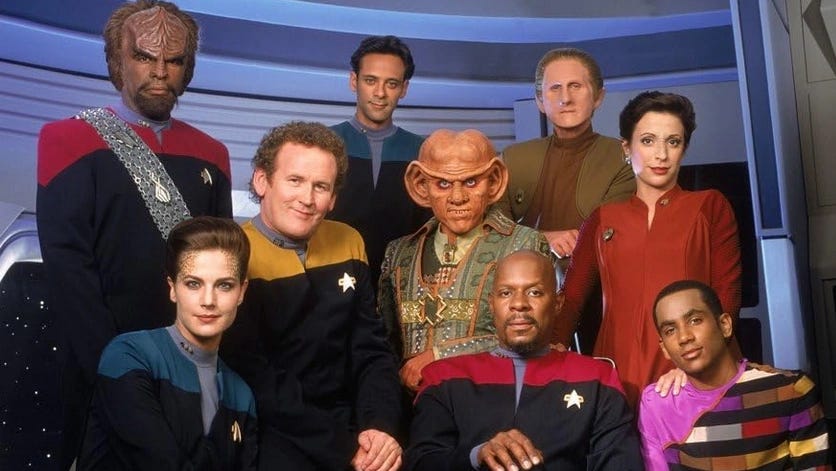
I’ve written about Star Trek: Deep Space Nine over the years for Vulture, including a 2019 review of the documentary in which I argue about the show’s rightful place in black TV canon and how the show is the most revolutionary depiction of black fatherhood in TV history. My love for this series is well-documented. If you’ve ever had the pleasure to kick it with me in person, you know I talk about Deep Space Nine quite a bit. A couple months ago, my boyfriend asked to watch the show with me because he wanted to get to know me better through this show I love. That kick-started a rewatch of every episode. We’re now in season four. Anyone who tells you the first three seasons are inconsequential or worse yet, “mid” are so fucking wrong. They’re engaging, fun, and bold. Creating the arcs that season four and onward builds upon in such beautiful detail. I told my boyfriend I will not be joining him in rewatching the final season because I can’t stand the fates of certain characters and find what goes on with Kai Winn….distasteful. I will be by his side for certain episodes because there are a few great ones in that season. But I don’t think it’s a coincidence I’ve only watched that final season all the way through twice.
With all that said about the first three seasons, it is undeniable that in introducing Worf (carrying over everyone’s favorite Klingon from The Next Generation) and building upon the already vital arcs from the first three seasons, that Deep Space Nine deepens itself. It becomes a show that I think is undeniably one of the best series in television history. The beginning of the fourth season is a testament to that.
Zoolander (2001)
(Dir. Ben Stiller)
I hadn’t watched Zoolander in over a decade despite continuing to wear out certain of its most ludicrous lines. In revisiting it, I realized how much I love this movie. No qualifiers necessary. Sometimes a dame just wants to laugh!
“I Was a Fool To Love You”
Short Story Collection (2022)
Written by Camilla Sosa Villada
Translated by Kit Maude
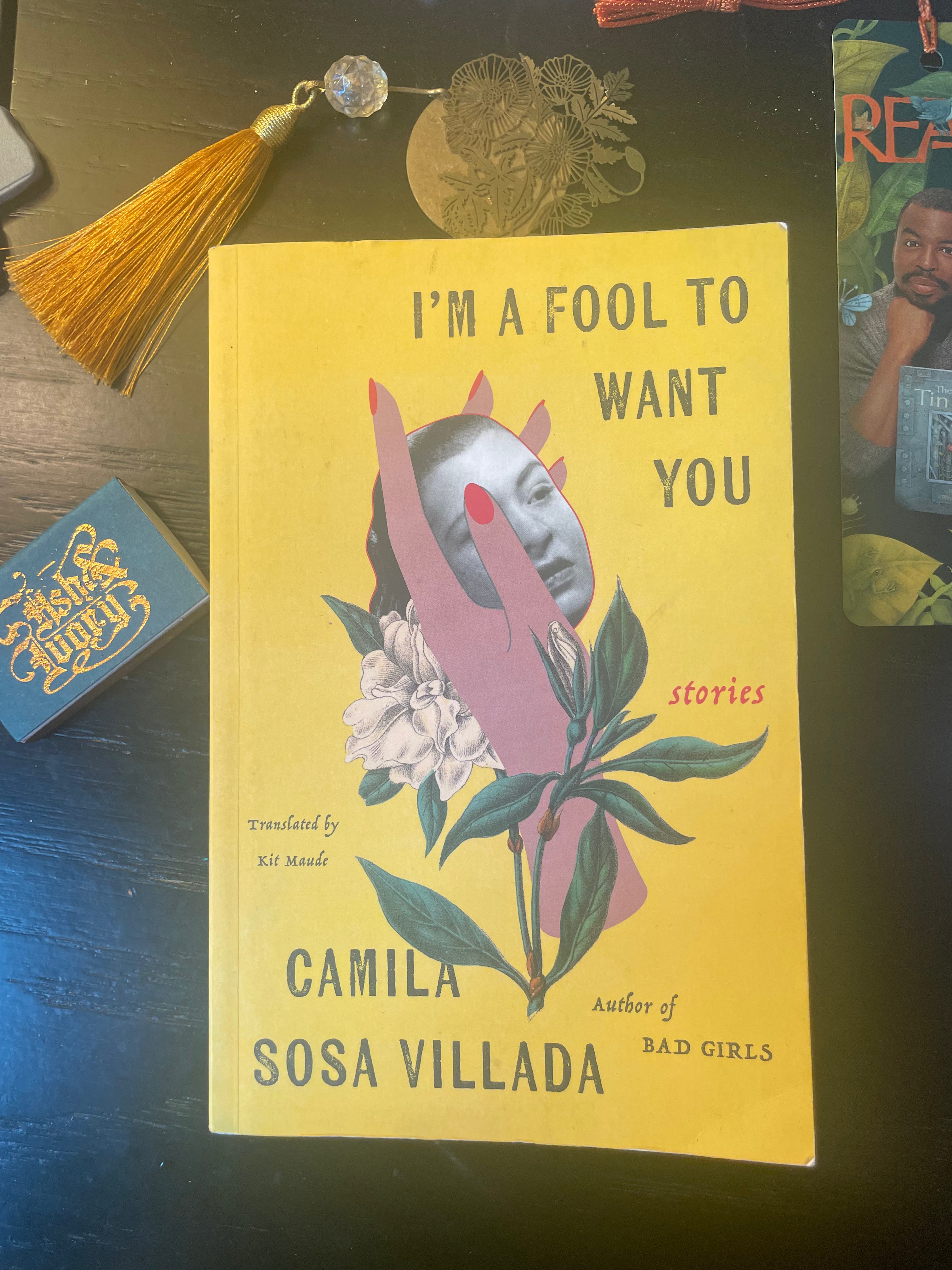
I first came across the work of Camila Sosa Villada when the cover of her novel Bad Girls caught my eye in the Logan Square location of the used bookstore Open Books. The Argentinian writer-actress has worked as a sex worker, street vendor, and hourly maid. There is an earthen magic to her writing. The sentences are ripe.
“When you get down to it, you can be as mystical and saintly as you like, but it always comes back to working the flesh,” she writes in one story. Ain’t that the truth.
Her work focuses often on trans women, sex workers, and other folks who live in the margins of society; crafting together a life full of color and joy against the oppressive forces of state sanctioned violence, racism, abuse, and transmisogyny. Her work is akin to that of filmmaker Pedro Almodovar: dazzling, defiant, and even deviant in all the best ways. The nine stories in this collection tease the boundaries of quotidian reality and the fantastical. No one is exactly what they seem. And everyone has the kind of humane complexity that comes with moving through this ragged thing we call life with self-awareness.
Two of my favorite short stories in the collection: A comedic tale set in the 1990s of a woman who finds a new way to make a living by being the rental girlfriend for gay men who remain closested by cultural and familial obligations.
The other? Two transwomen who have left their countries of origin for the hothouse flair of Harlem and become close friends with Billie Holiday toward the end of her life. “[Billie] was black, successful, sang better than all the white singers put together, and the American public loved her. She wouldn’t be forgiven a single misstep.” Excerpts like this demonstrate Villada’s ability to marry the beauty of musical language with revelatory social, cultural, and interpersonal truths. Reading her work is making me a better, more adventurous writer.
Couples Therapy
(Reality show, Season 5, 2026)
I watched the entire season pretty swiftly, with my boyfriend by my side, in part because I am curious about the ways we narrativize mental health and therapy as a culture. The more I watch this show the more evident it is the extreme burdens on women in relationships that are actively harming them, how successfully people can lie to themselves in order to not grapple with the hard work it takes to reconcile conflicting truths, and how, perhaps, a deeply therapized culture doesn’t necessarily equal a healthy one.
Gotham City Sirens: Love Hurts
Issue No. 4 (Final Issue of the Limited Series)
(DC Black Label comic, 2026)
Written by Tini Howard
Art by Babs Tarr
Colorist Miquel Muerto
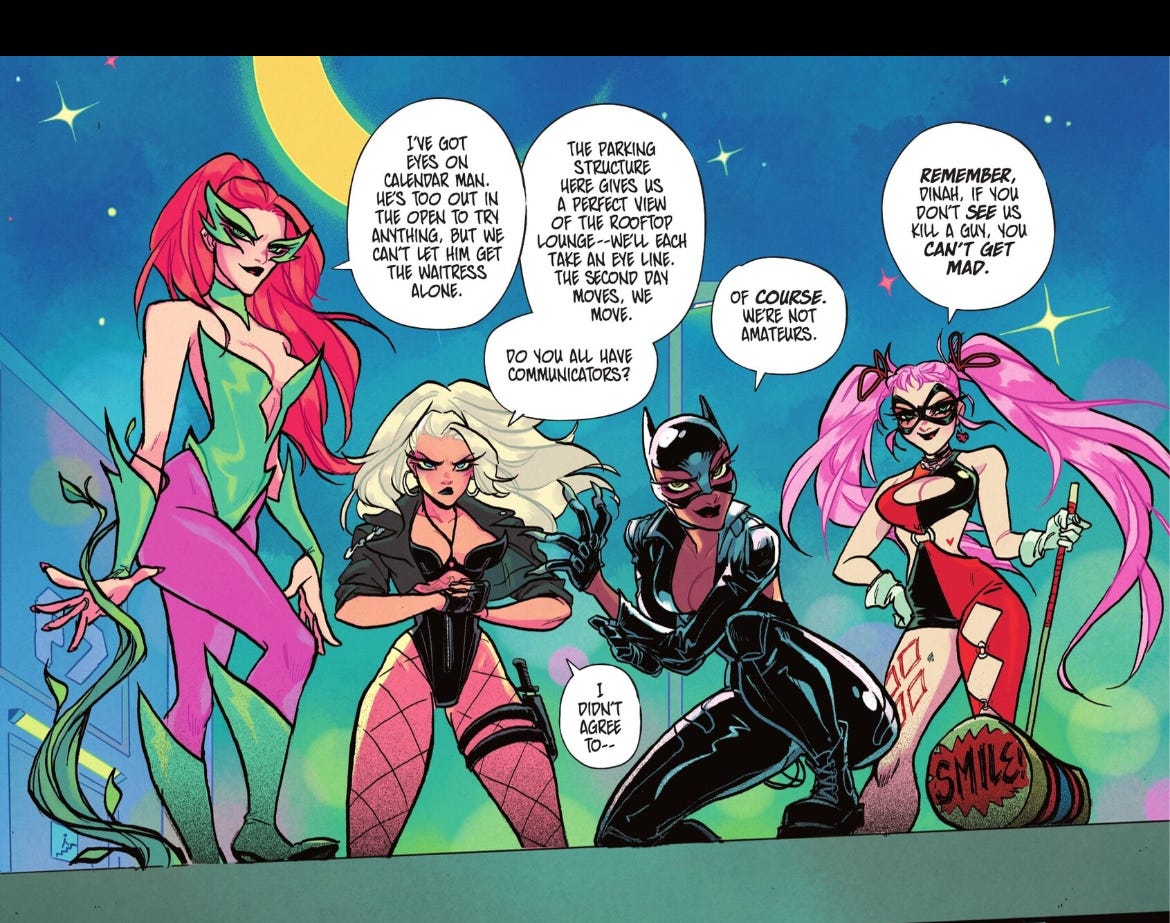
The final issue in this limited series proved this work is a delight. The colors are bright and tasty; a candy coated dreamscape. The art overall is as vivacious as its main characters. The writing has a buoyant hopefulness and pop-feminist swagger. The original Gotham City Sirens run in the 2000s concerned the friendship and villainy of Catwoman, Poison Ivy, and Harley Quinn — three characters I am obsessed with enough to have framed portraits of each of them hanging above my work-desk as I write this. The DC Black Label story sees Gotham’s boldest anti-heroines team up with proper hero and badass, Dinah aka Black Canary, to take down a serial killer targeting babes in Gotham on their birthdays.
Tini Howard’s run on mainline Catwoman a couple of years ago was divisive in certain circles. I enjoyed a lot of it though, with a few reservations. But I love what she’s doing here! Black Canary is an Aries who takes no shit. The relationship between Batman and Catwoman is hot as hell and just as sweet. Watching Poison Ivy and Harley Quinn realize their deep romantic feelings for each other lends the story a few moving emotional beats. This gives me what I want from this brand of comics: a fun fucking time.
Whisper of the Heart (1995)
(Ghibli Anime directed by Yoshifumo Kondō
Screenplay adapted by Hayao Miyazaki)
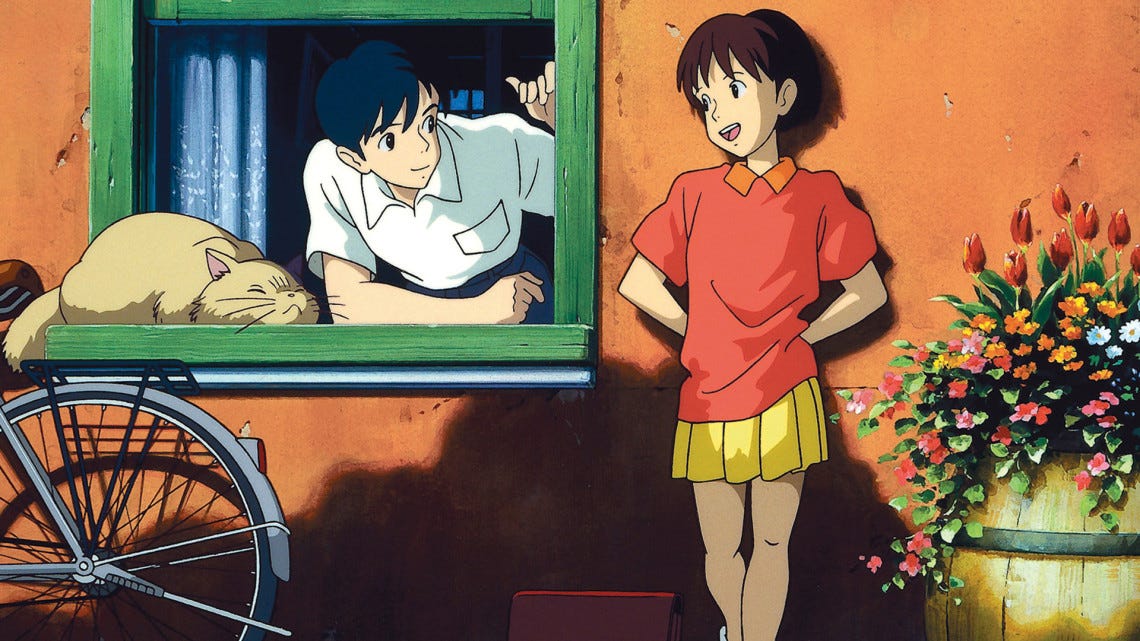
For most of this film, I found it sweet but slight. It focuses on teenaged Shizuku Tsukishima’s creative desires and curiosities as a young girl who discovers all the books she has keenly read from the library have been checked out previously by the same person: Seiji Amasawa. But the last twenty minutes of this coming-of-age tale surprised me, with its perceptive focus on Shizuku’s efforts to write a book inspired by a figurine she sees in a shop whose owners and denizens pique her curiosity. “Wanting isn’t enough. I want to learn more…” she says toward the end of the film. Girl, I feel you. That’s the energy I carry as a writer and artist too.
The love for HOKUM is appreciated. I feel it achieves what it set out to do better than the two recent financially successful horror films attempted. I really hope this director makes a few more in this style.
Deep Space Nine never got enough credit!