
Open Your Fucking Heart: Why I Loved Disclosure Day, A Review and Rant in 17 Notes
Spielberg's Disclosure Day is a film of complex emotionality worth wrestling with. It led me to think about my own stubborn hopefulness and the problem with mistaking cynicism for wisdom.

1. When I first saw Steven Spielberg’s latest film, Disclosure Day, at a press screening at the beginning of June, I joked to two close friends that also attended as we walked out of the theater, “Daddy Spielberg put his dick on the table and showed these young motherfuckers how to actually pace a movie.”
2. At nearly two and a half hours, Disclosure Day felt surprisingly swift. The movie interweaves spiritual and existential questioning with a propulsive, focused tale about the lead up and hard-won success at releasing over seventy years of stolen documentation proving extraterrestrial life has visited our planet. Puncturing the overarching plot is the understanding that this world is on the verge of World War III. The film ends just as the truth has been released, buzzing across a variety of global news broadcasts. After my first watch, I found the film engaging and emotionally moving. I enjoyed the train sequence for its supreme handling of tension. I thought the performances were strong, to various degrees.
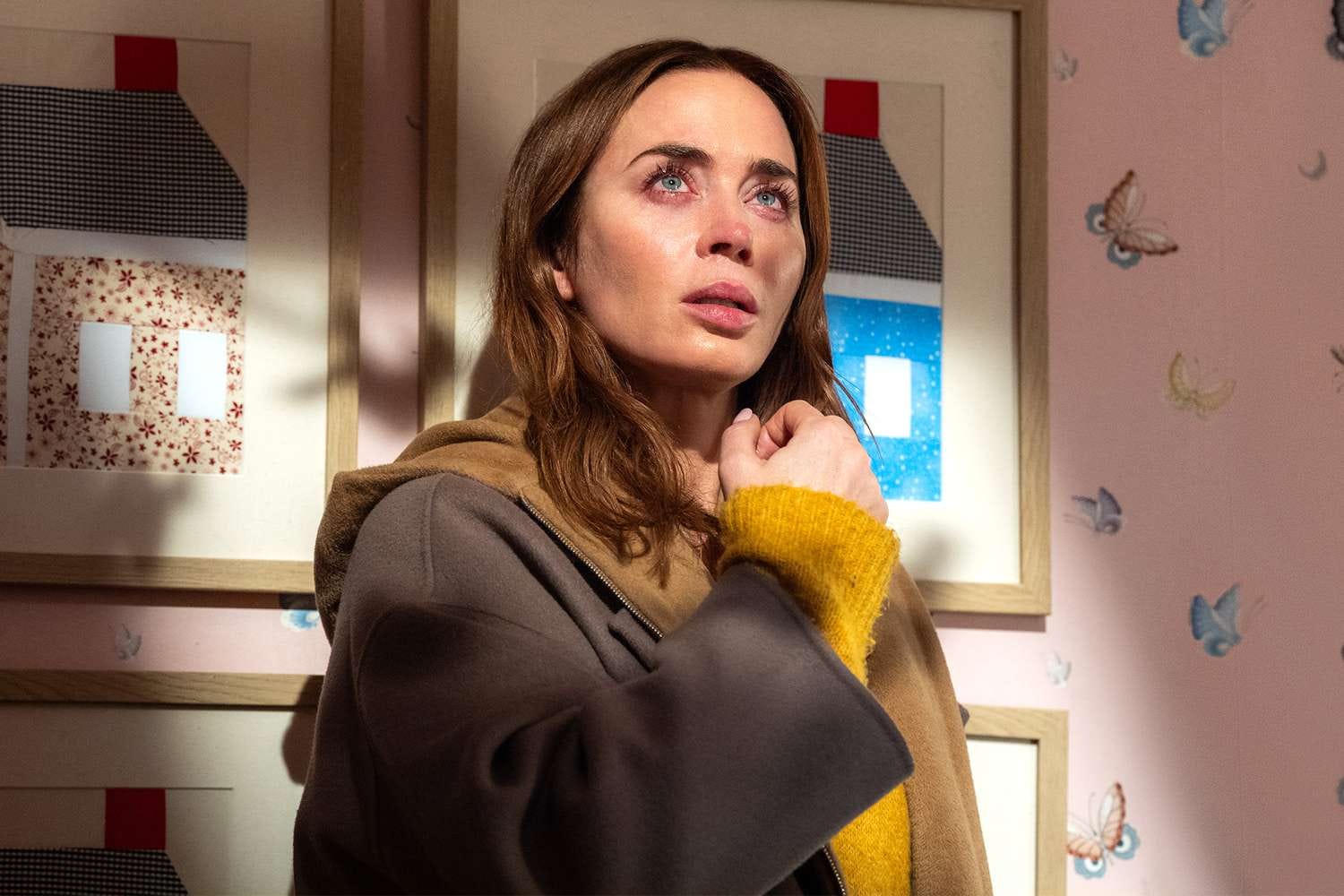
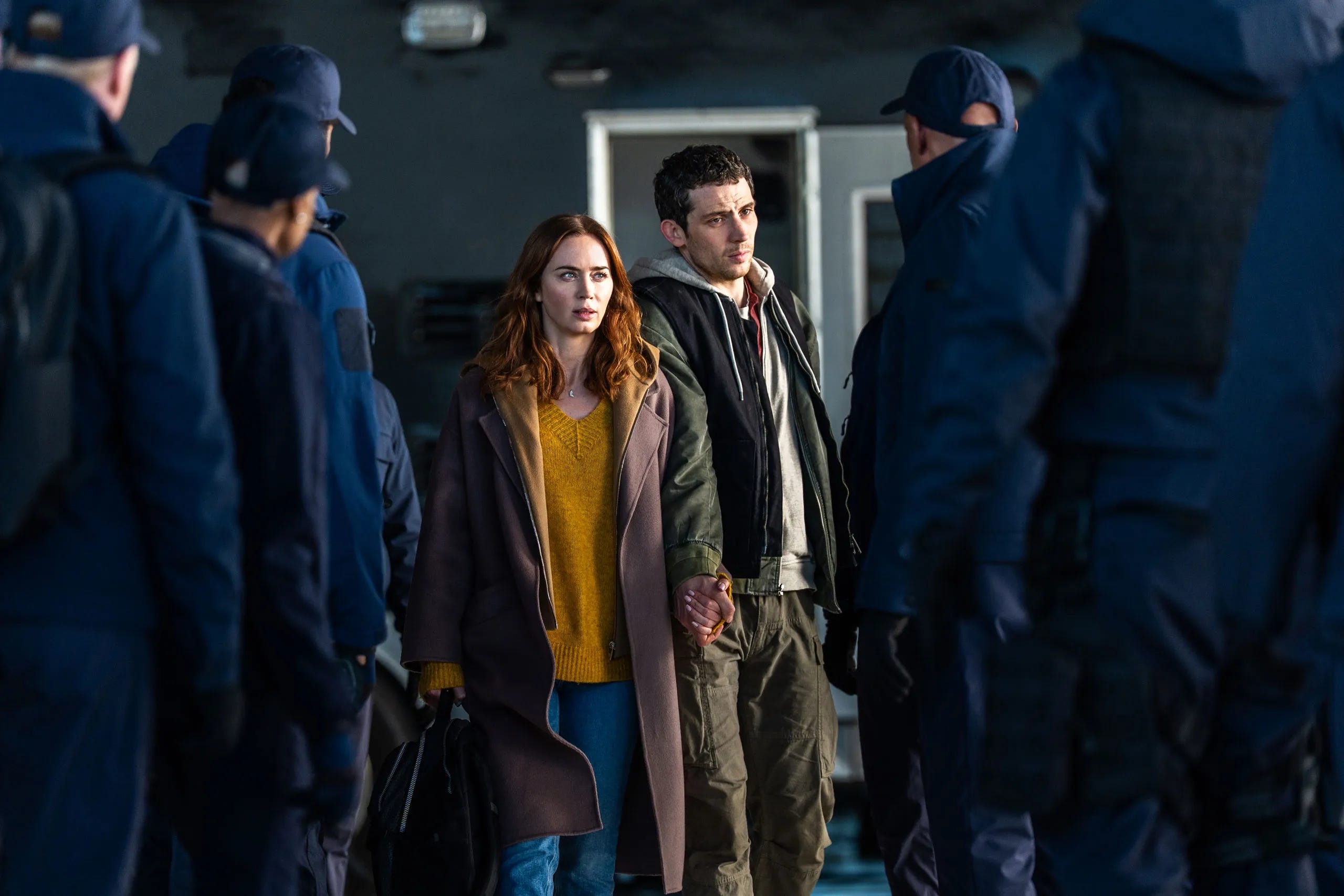
I appreciated the understated elegance of the long-shot — brought to life by Spielberg, his cinematographer Janusz Kaminski, and editor Sarah Broshar — tracking Kansas City weather newscaster Margaret Fairchild (a notably emotionally profound performance by Emily Blunt) through the news station as she cuts through the makeup room, into the main set, reading into people’s lives, and improbably speaking Korean after the abilities, she will learn later in the film were granted by aliens, activate1. I enjoyed the rapport Margaret builds with Daniel Kellner (Josh O’Connor), a once-imprisoned hacker and math wiz who was hired by Wardex, to hide the secrets he’s now decided to set free.
Wardex — alongside the Department of Defense and others in the defense industry — is the clandestine, and powerful organization that has been housing the alien technology and reverse engineering weaponry from it. The organization’s spear is represented by Noah Scanlon (Colin Firth), a man whose backstory of grief has allowed him to justify that he will bulldoze any boundary and destroy any person that stands in his way of having the truth about extraterrestrials remain exploited in the shadows Wardex manufactures.
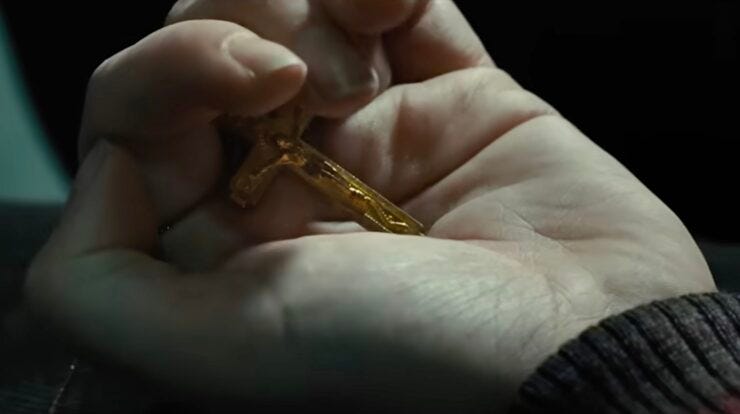
Like Margaret, Daniel learns in the back half of the film that he was experimented upon and gifted with great abilities by the aliens during a shared childhood incident from a time in his life he only murkily remembers. For Margaret it is the ability to speak all Earthly languages and see into people’s very souls and histories, sometimes even projecting an image in their mind of lost loved ones. It’s like empathy as a superpower.
For Daniel, they gave him “fluency in the language the book of the universe is written: mathematics” to quote Hugo (Colman Domingo), the former Wardex employee spearheading the apparatus fighting to release the truth to the public. Hugo’s journey was sparked by becoming close to one of the aliens the villainous organization experimented upon, that he would later help escape. There were a few things that didn’t quite work for me until my second viewing of the film on June 21st.
3. One thing that gained in esteem after the second screening is how the film respects its audience’s intelligence enough to leave so much unsaid and up to conjecture. Spielberg and writer David Koepp have crafted a film that’s fascinating as much for what’s onscreen as for what is left off of it.
4. In the glossy, out-of-print coffee table book Conversations with Wilder director Cameron Crowe has a long, career spanning, mind expanding conversation with one of the greatest Hollywood directors and definitely my favorite: Billy Wilder. The book is an astounding resource for storytellers iof all kinds. In his advice for screenwriters, Wilder notes in the ten point list a few rules I’d like to highlight:
Rule No. 1: The audience is fickle.
Rule No. 2: Grab ‘em by the throat and never let ‘em go.
Rule No. 7: A tip from [Ernst] Lubitsch: Let the audience add up two plus two. They’ll love you forever.
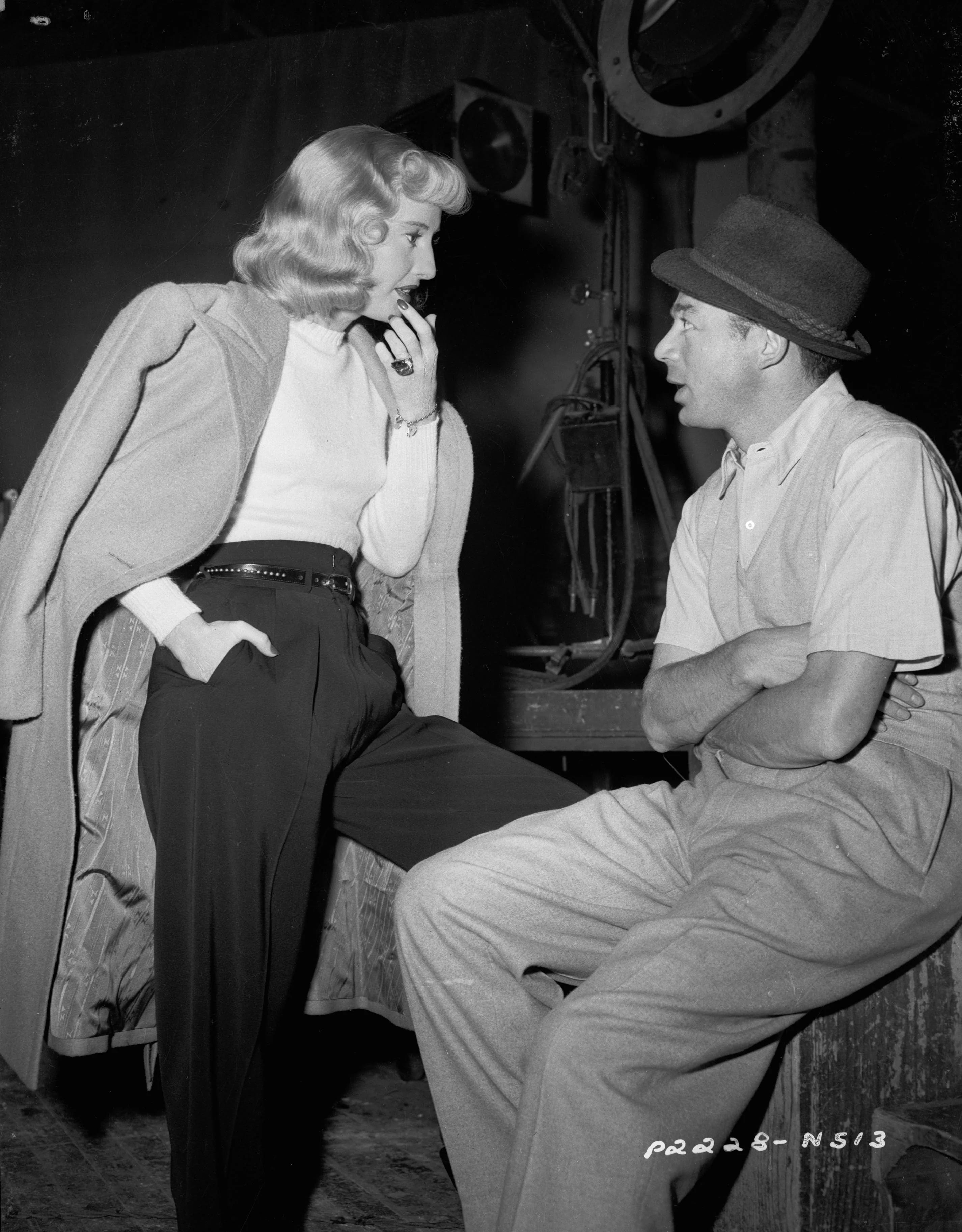
This is advice I came across in college and have carried with me ever since. I hold on to it. It guides my principles as a writer, essayist, and critic. Assume your audience is intelligent enough to pick up what you’re laying down. I assume an engaged, curious readership. In doing so, you can create pockets of discovery as an artist; leaving space for audiences to bring themselves to the work and make connections that encourage active spectatorship. Watching film need not be a passive act.
The tricksy complication of this is that we now live in an artistic and media literacy moment — thanks to obsessions with “cinematic sins” like plot holes, a government that wants its populace to be stupid and easily manipulated, viewers trained on the numbing effect of Marvel films and the wider industry they’ve reshaped — in which audiences and critics alike seem resistant to engaging with films on their own terms.
5. This clip from the Big Picture Podcast I’ve included below exemplifies people’s specious arguments about the film. In the climactic moments as Daniel and Margaret tirelessly work to release the truth, news station workers looking at the footage from Rockefeller Center in New York wonder aloud, Is this real? Is this AI? The film is aware of the doubts that would crop up in a populace hopelessly on their phones because WWIII is darkening their doorsteps.
But in clips like this one from the podcast, the film’s empathy and curiosity is framed as out-of-touch and sentimental to a fault. I find it troubling that a belief in truth and hope is being branded as a “boomer” ideology. The hosts tie Spielberg’s belief in releasing the truth and its potential to change hearts and minds as an inherently boomer ideology. But to read it like that is an odd misreading of the film.
6. Your cynicism isn’t wisdom. I’d argue cynicism is the exact opposite of wisdom. It is closed off, unbending, cruel.
7. One of the criticisms I’ve seen most often pointed at the film is that Disclosure Day is ridiculous for demonstrating that people would come together, marked by empathetic outrage toward the cruelty beings unlike ourselves endure at the hands of our government and the defense industry, in the wake of these revelations. I’ve seen it argued in a number of forceful ways that it isn’t just unbelievable but dangerously naive given how divided and individualistic our global populace is. Here’s the problem with this line of argument against Disclosure Day: that never happens at the end of the film.
We witness people’s confusion and shock as they watch the news, after already being emotionally heightened by WWIII’s likelihood. We witness individuals like the NBC news anchor wonderfully played by Courtney Grace moved to tears. But there is no moment showing a galvanized public, just a shocked and befuddled one.
8. Daniel shows his girlfriend, Jane (Eve Hewson), the footage of the alien’s torture. As someone who was once studying to be a nun, this evidence brings up a host of knotted questions for her about humanity’s place in the universe that leads to the most provocative line of thinking in the story. The high-pitched scream of the alien in the stolen footage carries such pain it overwhelms Jane. She can’t watch anymore.
For many viewers, Disclosure Day showcasing individual characters – Daniel, Jane, Margaret, Hugo, the NBC newscaster – moved to tears and action by the violence against these beings as unreal, unlikely, and unbelievable.
No shit people in our world don’t all stop everything we’re doing to care about the harm against other beings – whether that be abused wives, animals trapped in the ravenous maw of factory farming, or those displaced and harmed by genocide, like Palestinians. What Disclosure Day is saying is that maybe we should.
9. Why is the fact that Disclosure Day doesn’t play out with the cynical edge people feel is more truthful and indicative of our world a mark against the movie? It is remarkably unimaginative to hold film to the standard that it must directly reflect our reality to speak any worthwhile truth. Seeing so many critics, journalists, and thinkers expect film to be one-to-one with our reality makes me worry that media illiteracy is more entrenched than I realized.
Looking at the response to the film made me worry that people don’t want to be challenged and expanded by film but confirmed by it. Why is the measure of good cinema how successful it is as a mirror for our world?
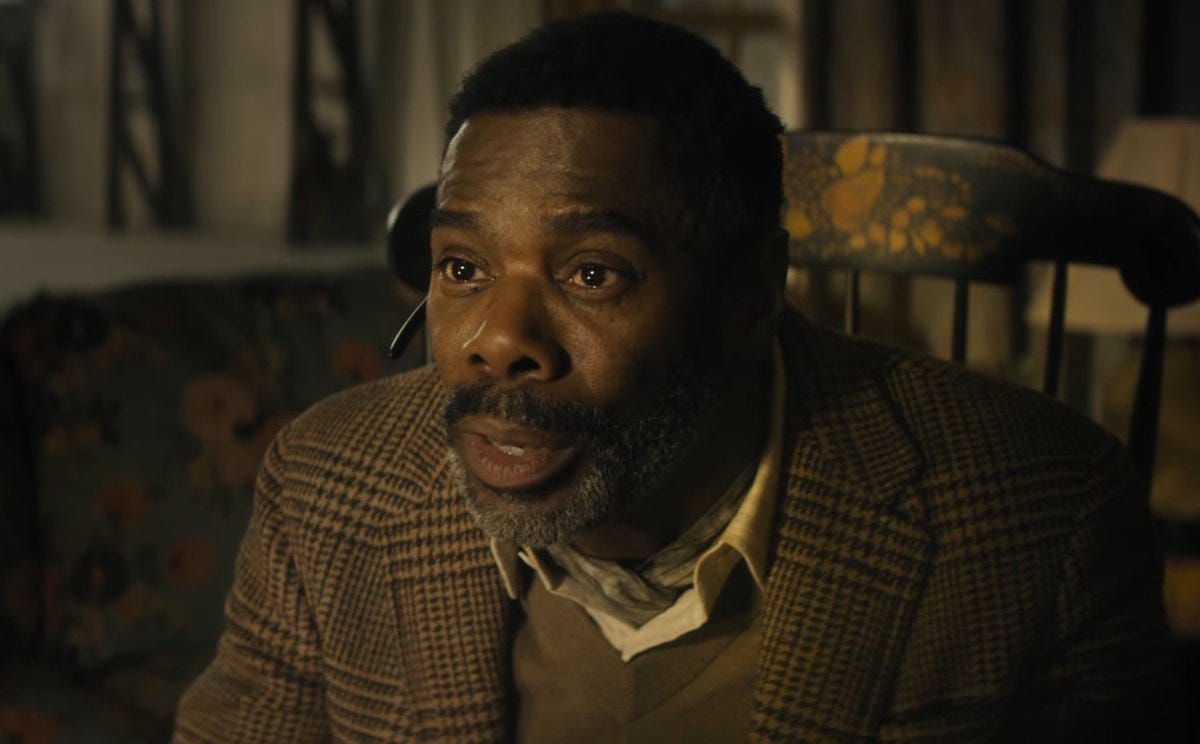
10. My favorite scene in the film takes place on the hidden soundstage Hugo and his team are crafting into what we will learn is a replica of Margaret’s childhood home. It is there that she first encountered aliens at ten years old. Oh, to return to the homes that have scarred us and made us who we are.
In utilizing the alien technology to project himself to Hugo, Scanlon kindles a conversation that acts as the beating heart of the film. The scene between them portrays Hugo’s expansive empathy next to Scanlon’s embittered cynicism. He has no faith in humanity. (Something Jane similarly struggles with momentarily. Which is beautifully outlined in her conversations with Sister Maura played with fierce conviction and wry grace by Elizabeth Marvel.) Whatever kindness he once had died with his wife.
Scanlon believes that the public learning the truth about alien life would lead to irreversible chaos; that humanity doesn’t deserve a truth they may not be able to handle. He looks down on humanity and its potential.
“That’s a very lonely way to look at the world,” Hugo counters. And how wonderful is Domingo’s acting in this scene? His body language is open. His face portrays such a clarity of emotion, such incandescent sadness and hope braided together as he faces someone he once thought of as a friend. The most instructive thing Hugo says is also the most moving: “[The aliens] regard empathy as our foremost evolutionary advantage.” Isn’t it sad that Scanlon sees empathy as a trifle or worse an impossibility, even a prison? Isn’t it damning that audiences agree with him?
11. What surprised me most about the film is how much I enjoyed Emily Blunt’s performance. The conversation about whatever work she may or may not have gotten done to her face is a conversational and intellectual dead-end. But those saucer eyes and trembling voice imbue such tenderness in the film.
12. What has been bothering me is witnessing other self-identified leftists argue from a place of cynicism that borders on nihilism. No one would act like this if they witnessed this alien being abused. No one cares about people being harmed in our world, why would a fictional story show such care? If people don’t give a fuck about Palestinian children and parents and doctors and caretakers being bombed into oblivion how could characters in a fictive world give a shit about fucking aliens? And on and on and on.
To people making such arguments, I must ask, if you don’t believe it is possible to change the hearts of people — to touch and transform the most vulnerable parts of our humanity — what are you fighting for? Or maybe y’all hyper-online leftists don’t want liberation. Maybe you’re more interested in being right, no matter the cost. What a hard-hearted way to move through the world. Shouldn’t art expand what we think is possible rather than confirm our most noxious beliefs?
13. I am far-left on the political spectrum – taking my cues from Marxist feminists and black radicals – because I believe in the beings that call this gorgeous planet home. Like I wrote almost two years ago for this newsletter, What do we owe each other, this planet that nurtures us, and the creatures we share this Earth with? Everything. We owe each other everything.
14. I have witnessed and experienced a lot of horror in my life. My first memories as a child are witnessing the hideous physical violence my father bestowed my mother, that became an inescapable force in our home until they divorced by the time I was five. He put his hands on her because his pain was more important than the safety of his wife and children. I’ve been violently raped. I’ve been put in a mental hospital several times, the first at only thirteen years old. I’ve been abused by men who said they loved me. But treated love as a cudgel instead. I’ve been so overcome with madness and sorrow I’ve had psychological breaks with reality. I’ve always been a remarkably sensitive person through it all.
15. Several years ago, when I interviewed the therapist I had from about 12 years old until just past high school, she said something that reconstituted my understanding of this sensitivity, “You were an extremely sensitive person. Everything came to you in all its colors — and a lot of volume. I think it was overwhelming for you. You didn’t have a grand amount of skills — like most young people. You were very creative. One of your greatest skills was using that to manage things.”
For a long time, I was in emotional free-fall. Unmedicated, drinking too much, and smoking even more than that. Weed was once a way to disassociate from all that color and volume2.
It would be easy after all that abuse and tragedy to close myself off. It would be easy, albeit woefully misguided, to treat hope and wonder and connection with fellow beings as an impossibility. I actively make the more difficult, opposing choice: to believe in the power of humanity and connection. To believe we can change this world for the better. To believe that my sensitivity, my vulnerability, and my sense of empathy are powers to be nurtured, not faults to be severed.
16. Cynicism isn’t wisdom. I’d argue it breeds a nihilism that is the exact opposite of wisdom. I refuse to believe that human nature is hopelessly violent, individualistic, and cruel. I’ve seen too much grace in my life alongside the horror. I think humanity is adaptable. I believe in our goodness. I have to in order to survive. I have to believe in this goodness in order to keep fighting for this world to be a better place for the creatures and people who will be around long after me.
17. The response to Disclosure Day demonstrates that despite so many people yearning for connection and community – longing desperately for human touch – they refuse to make the vulnerable risks necessary for that touch to change them for the better. Hopelessness will not change the world, but it may destroy it.
I didn’t have space for this in the main body of this piece but the aliens coming to people in the form of animals feels so sweet to me. That these animals are so evidently CGI grants them an uncanniness that works in the movie’s favor.
I quit smoking weed this spring.
Absolutely loved the review, Angelica! One of your best, which I highly agreed with all the way through, with this paragraph especially:
the film’s empathy and curiosity is framed as out-of-touch and sentimental to a fault. I find it troubling that a belief in truth and hope is being branded as a “boomer” ideology. The hosts tie Spielberg’s belief in releasing the truth and its potential to change hearts and minds as an inherently boomer ideology. But to read it like that is an odd misreading of the film.
Love this essay. I agree 100%, and my second viewing helped solidify my reaction too. The movie literally ends “Listen”! I don’t want to be so cynical I can’t accept listening as useful advice in a chaotic world. No matter how difficult it may be to achieve the change we want, listening is definitely part of the formula.